database & web app
Data Center Policy Database
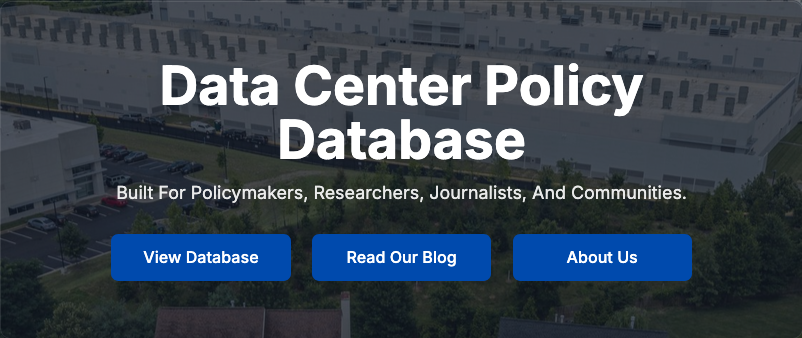
The DIGS Lab compiled more than 1500 federal, state, and local policies related to data centers in the United States.
You can now look through it on our public-facing database at datacenterpolicy.com
We found that while the era of unchecked growth fueled by tax breaks is waning, the new regulatory regime is fragmented, reactive, and heavily contested. Read more about the trends we found in this Tech Policy Press article, The State of Data Center Policy in the United States
Team: Lauren Bridges, Jack Hauger, Grace Gould, Catarina Coehlo, Bella Scorsone
Support from: Digital Technology for Democracy Lab and Environmental Institute, UVA
research project
Living with Data Centers: Co-Producing a Framework for Climate, Community, and Infrastructure Resilience in Loudoun County, Virginia
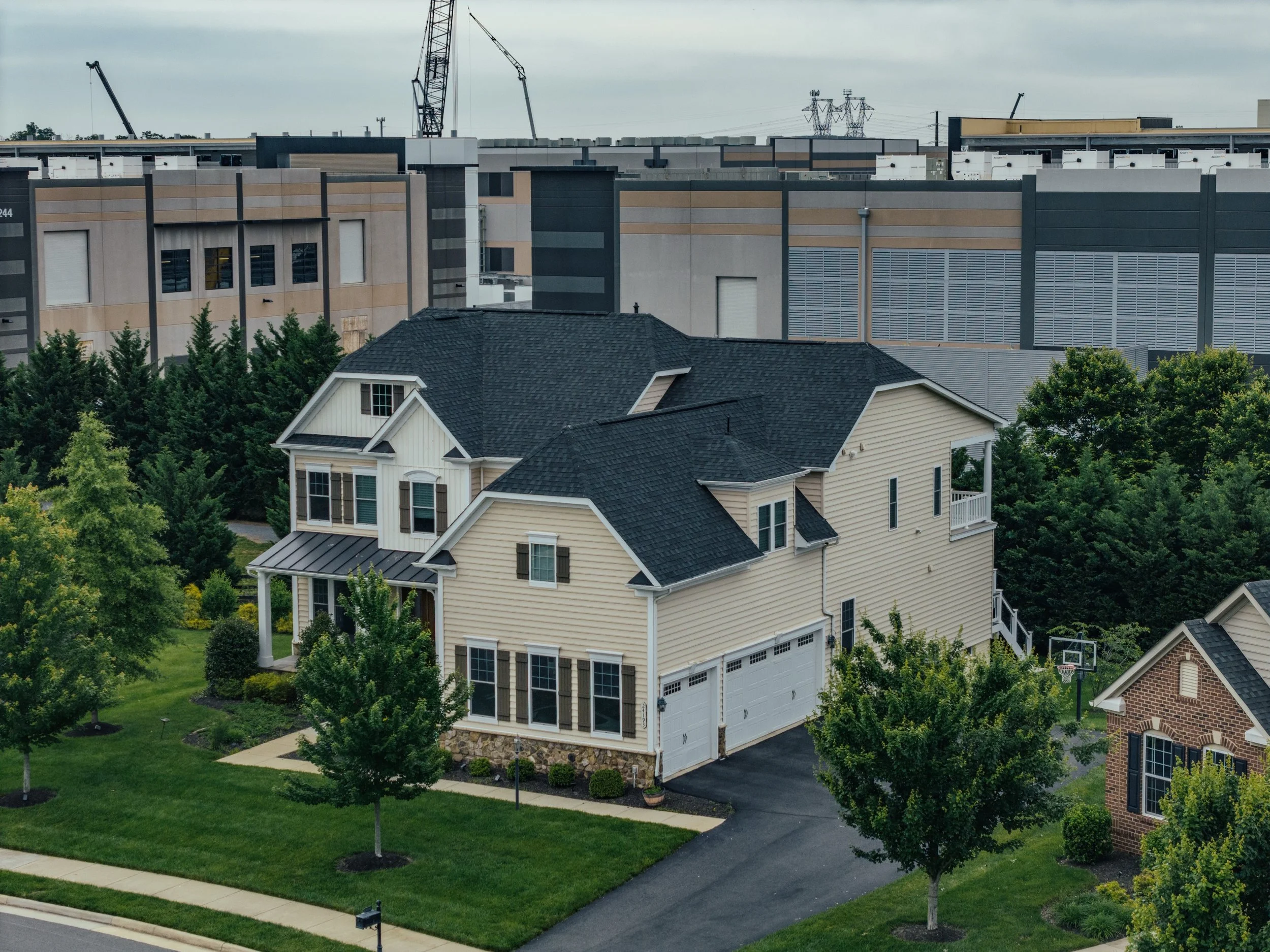
Loudoun County, Virginia, the world’s densest concentration of data centers, offers a critical case study for examining how the rapid expansion of digital infrastructure intersects with climate resilience. As artificial intelligence (AI) drives unprecedented demand for computational power and digital infrastructure, data centers are consuming ever greater amounts of electricity and water, placing high demands on regional grids, extending fossil-fuel generation, and transforming land use in Northern Virginia. These pressures are amplified by climate change as rising temperatures, drought risk, and severe weather events compound vulnerabilities in energy and water systems.
This project will examine how data center expansion impacts climate resilience, energy systems, water resources, and community well-being. By integrating community perspectives with technical analyses of grid reliability, life cycle cumulative impacts, spatial imprints, and economic tradeoffs, this project will co-produce, with decision-makers and county stakeholders, a first-of-its-kind localized study of the cumulative demands of data center development.
Collaborators:
Ali Fard, Assistant Professor of Architecture and Urban and environmental planning, Department of Urban and Environmental Planning, University of Virginia
Lisa Colosi Peterson, Associate Professor & Director of Graduate Studies, Department of Civil and Environmental Engineering, University of Virginia
Negin Alemazkoor, Assistant Professor, Department of Engineering Systems and Environment, Department of Civil and Environmental Engineering, University of Virginia
Sergio Guillen Grillo, Assistant Professor, Engineering & Society, Department of Engineering and Society, University of Virginia
Joao Ferreira, Regional Economist Center for Economic and Policy Studies, Weldon Cooper Center for Public Service, University of Virginia
Tanya Denckla Cobb, Director, Institute for Engagement and Negotiation, Institute for Engagement and Negotiation, Weldon Cooper Center for Public Service, University of Virginia
External Partners:
Julie Bolthouse, Piedmont Environmental Council
Tim Hemstreet, Loudoun County, Administrator
Buddy Rizer, Loudoun County, Economic Development
Funded by the Environmental Institute, UVA
research project
Locating Infrastructure: Energy, Water, and the Societal Footprint of U.S. Data Centers
Key words: data centers, energy, water, hydrology, siting, cumulative impacts, drought
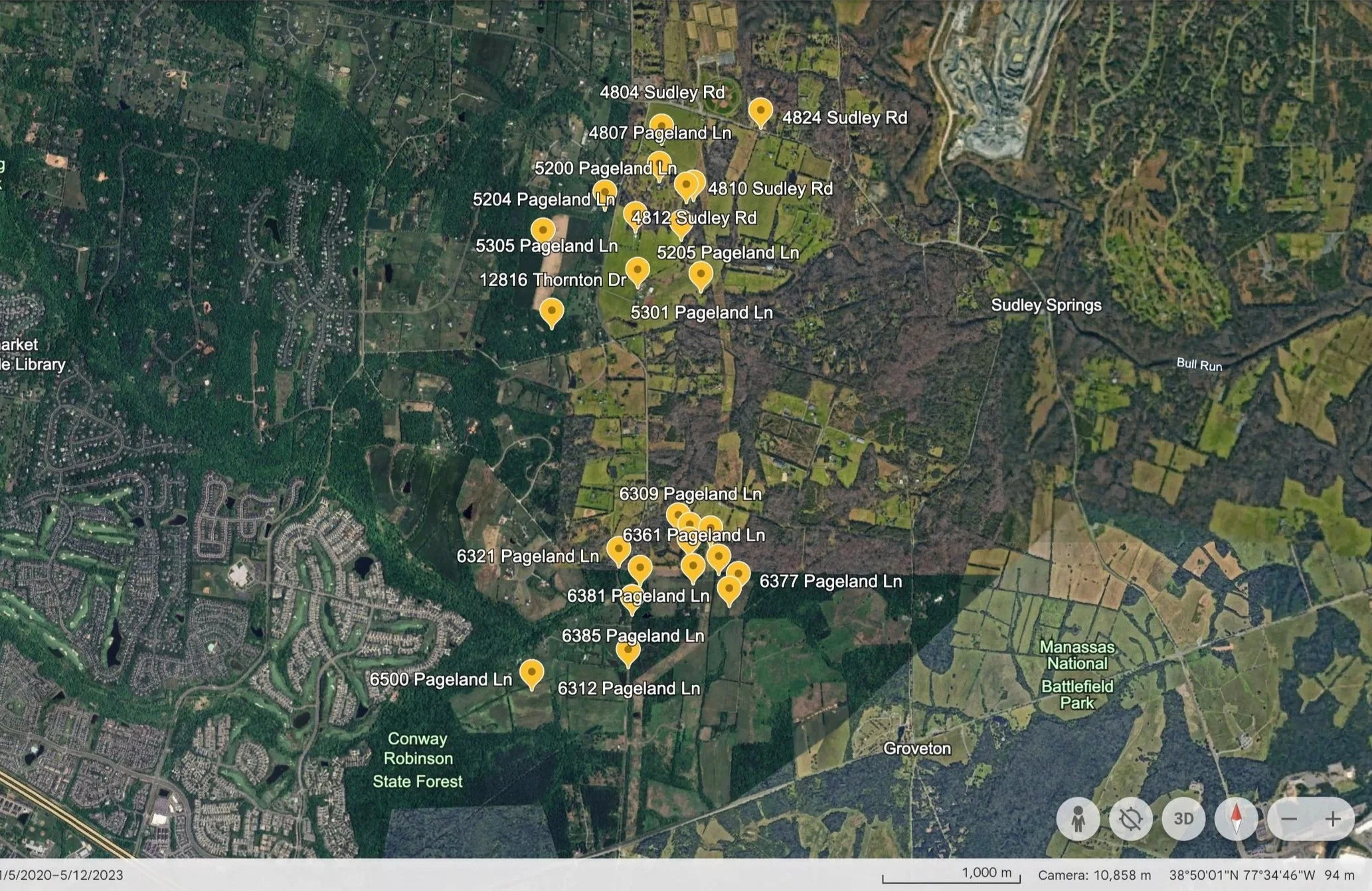
This project explores how the explosive growth of data centers is reshaping energy and water systems, land use patterns, and local governance in the United States. Researchers will conduct a comparative analysis of data center siting in both mature and emerging markets in Northern Virginia and the Chicago region. By combining spatial modeling, empirical data, and institutional analysis, the team seeks to uncover the infrastructural and environmental dependencies that influence where and how data centers are built.
A key focus of the study is the dual water footprint of data centers: direct consumption for cooling and indirect use via electricity generation. This dual-pathway analysis is timely and novel, especially as growing AI workloads intensify energy demands and water stress across regions. The project highlights how efforts to optimize energy use may inadvertently raise water consumption, creating trade-offs that require deeper scrutiny. It also addresses often-overlooked risks from wastewater, stormwater, and seasonal water storage, offering a systems-level perspective on emerging vulnerabilities. The findings will inform policy recommendations for local and regional governments, utilities, and planners managing the environmental and social consequences of large-scale data infrastructure.
Collaborators:
Joao Ferreira, Regional Economist Center for Economic and Policy Studies, Weldon Cooper Center for Public Service, University of Virginia
Larry Band, Ernest Ern Professor of Environmental Science and Professor of Civil and Environmental Engineering, Department of Engineering Systems and Environment, University of Virginia
Funded by the Environmental Institute, UVA
exhibit & collaborative global research project
Geographies of digital wasting: from mine to discard and back again

How can efforts to ‘green the internet’ account for the global flows of digital wasting produced throughout the tech supply chain in a globally dispersed, decentralized internet? This project brings together a transnational team of researchers working in different sites from Zimbabwe, Taiwan, Greenland and Iceland and the United States to understand how digital waste moves through different life phases from extraction of rare earth minerals, to operational and consumption in cloud computing and logistics, through to the management of e-waste recycling and discard at the end of the lifecycle. Expanding our understand of digital waste beyond the post-consumer lens of e-waste as a thing that happens at a certain point in time, we focus on the human and material costs of digital wasting as a process, how it flows through different global sites at different times, and the challenges of raising awareness around the harms of digital wasting.
As a research team, we assert the need to broaden our definition and understanding of e-waste to include waste generated at all points in tech supply chains, and by illuminating the unequal flows of this waste from the Global North to the Global South. The implications of connection-making across contexts in our research cannot be overstated: as climate change continues to shape life on our planet, we know that its effects will be distributed disproportionately along political, racial, and economic lines. Our research aims to support an increased understanding of the Internet’s role in environmental changes and their subsequent ecological and human costs, while also informing policy and practices to combat the climate injustices associated with the e-waste. This project also models a method for doing collaborative, global research that works across multiple regional contexts.
Collaborators:
Zane Griffin Talley Cooper
Ingrid Burrington
Ann Chen
Vusumuzi Maphosa
David Zezai
Margaret Macherera
Jasper Mangwana
Funded by the Internet Society Foundation
book project
Land of Data: Land Use Politics and the Limits of Digital Growth

Key words: digital economy, digital infrastructures, land use, digital labor, data centers, environmental media studies, critical data studies, digital geographies
As the digital transformation of society continues to expand exponentially, so too has the demand for digital infrastructures. But construction of industrial-scale digital infrastructures to support these activities occurs in uneven patterns with uneven consequences for local and globally dispersed communities. Through an ethnography of digital expansion in Northern Virginia and Southern Inland California, where digital industrialists have been aggressively expanding to support their data-intensive operations, this book shows how local policymakers, developers, and digital industrialists form coalitions to prioritize their vision of digital growth while overlooking the long-term and geographically expansive impacts. Digital growth boosters rehearse familiar arguments to justify their continued expansion: uninterrupted global connectivity, exponential economic growth, increased production efficiencies, provision of new jobs and careers, and reduction in environmental impacts due to advancements in new technologies. And yet, while digital growthism has become naturalized in our social relations, it is far from settled. Opponents of the digital growth machine create data friction through land use protests, resistance to datafied labor processes, and through targeted policy interventions to slow the harmful environmental impacts of misguided digital growthism. By attending to moments of tension and rupture in local politics around land use decisions, environmental and energy policy, and data-driven workplace practices, this book reveals how our misguided commitment to limitless digital growth can be overcome through collective action and refusal. As more of our digital tools, platforms, and devices are being built upon these core digital infrastructures, it is crucial we understand how the logics of the cloud and imaginaries of endless digital growth increasingly collide with the politics of land, labor, and waste.
educational video
Toxic Clouds and Dirty Data
Data centers are the physical location where cloud-connected devices and platforms store and retrieve data, which keeps the global internet running. Like any factory, data centers take up a lot of space and use a lot of energy and water to cool the computer servers and make sure your Netflix, Hulu, and HBO stay connected whenever you want them. Besides the huge amount of water and energy data centers consume, they also produce noise pollution, and tonnes of e-waste, which then has to be broken down, shredded, smelted, shipped off-shore for processing, or thrown into landfill.
With the increasing threat of climate catastrophe, data centers are facing a confluence of existential threats from water scarcity, to increased blackouts due to overheating, to bomb threats, among other issues.
This short educational video explains some of the concerns around our increasing reliance on data centers and why we might need to rethink what kinds of digital futures we are building today.
The video aired on public community access television in Philadelphia (PhillyCAM) in December of 2022.
This video was generously supported by The Kleinman Center for Energy Policy and
the Internet Society Foundation.